WHY YOU’RE DISAPPOINTED THAT ARA IS NOT ABOUT A POOR GIRL WITH A DISABILITY IN AFRICA
The Non-Disabled Trap.
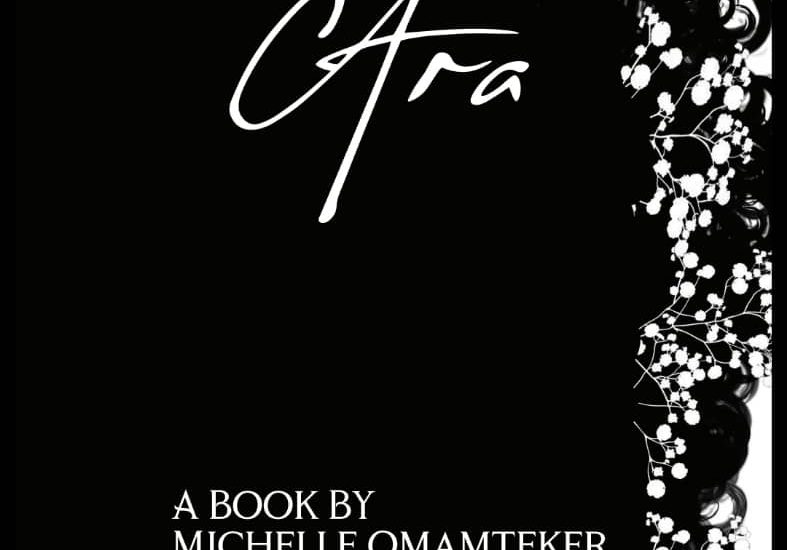
From the moment I published my first African contemporary fiction novel ‘Ara’ in 2021, I’ve been met with widespread confusion by most of the readers that I have interfaced with, always with the same well-meaning tone, the same furrowing of their eyebrows that they try to hide: “Why isn’t Ara poor?”
The question is never about curiosity; I don’t believe so. From my decade-long activism in ‘Disability Rights,’ I write Disability Rights in quotation marks for good reasons, and I’ll spill my position on this further. More on that later, back to Ara and the Non-Disabled expectations for her to be poor. That’s it! It’s about expectation. It’s about sculpting a story familiar to the non-disabled psyche. The belief is that disability, to be recognised or validated, must be wrapped in poverty, in struggle, in drool and dirt. That an African disabled protagonist like Ara, must be poor or in physical strife to be worthy of the novel’s thirty chapters and a hundred thousand page word count. That her existence must be tragic to meaningfully capture the Non-Disabled’s attention.
I wrote Ara the way I wrote Ara because I did not want to write poverty as a prerequisite for empathy anymore. I did write about disability with a poverty outlook in my first book, a children’s book series, Malengo Tales, set in a village. And after publishing and promoting the book, I felt like I was adding a spectacle for the limited non-disabled imagination, reinforcing a narrative that I tried to break by organising one of Africa’s largest inclusive fashion shows with the participation of Persons With Disabilities that was profiled by CNN in a 2018 Inside Africa documentary segment-The Hot Pink Catwalk. So, if I organised the Hot Pink Catwalk to dispel the myth that Persons With Disabilities aren’t worth the glamour, the red carpet treatment, and the lights, why was my first book set in a village reinforcing a narrative I was trying to segue from in the first place? It’s because, like you, who is uncomfortable about Ara not being a poor girl in my second novel, I was still trapped in the Non-Disabled psyche of disability in Africa when I wrote Malengo Tales earlier. Despite being a ‘Disability Rights activist and being perceived as having evolved, I, too, still held silent beliefs about how disability is digested in Africa’s literary world, so I wrote Malengo Tales to appease your familiarity with the disability question in Africa.
I’m not here to claim poverty doesn’t exist. It does. And yes, it engulfs disability in Africa in ways that are violent and unjust. But I have grown weary of the Non-Disabled gaze that only wants to see disability in Africa through a cracked lens of pity and helplessness. I refuse to reproduce the kind of storytelling that flattens people with disabilities into metaphors or, worse, props for the Non-Disabled’s moral awakening.
So no, I don’t write about people with disabilities in Africa with poverty as the centrality of my fiction works, not anymore.
Not because poor people with disabilities aren’t there or aren’t worthy of their stories being told, far from it. But because fiction is about world-building, and in the worlds I build, the comfort of the Non-Disabled psyche is not my equilibrium; rather, pushing it off its balance is. I build worlds that are and those that could be. Also, I will no longer be your enabler to sniff onto the addictive proverbial drug that you are ‘better than’ simply by your Non-Disabled existence. There are Persons with disabilities who are more affluent, more beautiful, better educated, more exposed, and more dynamic than you, however few you may presume them to be. I will write about them in my fiction works until their existence sits neatly in your psyche as a reality.
The Non-Disabled Gaze.
There is a particular lens through which Non-Disabled Africans have been programmed to view disability in Africa. It is narrow, predictable, and painfully familiar. The Non-Disabled gaze is a deep pothole that we must quit cautiously driving around, roll our psychological sleeves, and fill up the gaping hole in our shared street. It’s a gaze that demands that disabled African bodies be broken, begging, and their bravery be the Non-Disabled’s inspiration. It insists on literature of rusted crutches in red dirt, children crawling on their elbows through sewage-filled alleyways, and mothers whimpering about curses and shame. It hungers for helplessness, packaged, palatable, and preferably photogenic as the whole story, not part of a story. It breathes completeness into the brokenness rather than using it as a vehicle to expose its unjustness.
And, I’m not talking about the foreign photographers who come and take pictures of this half-baked reality, as uncomfortable as I am about the dignities of the vulnerable people with disabilities photographed for public display (Something I am guilty of violating much earlier in my activism), at least the foreign allies mostly do it to extend consistent help in our societies through structural support to at-risk communities. But, you and I, who grew up gazing like a passerby, separate from the disability plight, with the belief that they’re someone else’s problem, always waiting to be rescued by a foreign handout, your Non-Disabled African gaze of the unworthiness of their respect has been internalised. You have learnt to ‘perform your empathy,’ not to truly feel it. We do ‘one-time’ funding for the spotlight, our coin, in exchange for attention. The more pitiful the story, the more likely it is to be published, aired, or shared by an African. Africans with Disabilities are rarely viewed in literature as bold risk-takers because African writers are essentially part of the gaze that has been internalised. You cannot out-write your truths. So, African literature rarely writes characters with a disability. When they very seldom do, they perpetuate cautionary tales or objects of inspiration, never full humans with fears and desires beyond the Non-Disabled’s gaze of what their disabilities mean.
I call it the “disability face beat” effect. The idea is that people with disabilities exist to inspire the non-disabled by simply surviving and that their disabled lives instantly beautify the Non-Disabled when juxtaposed. It is the story of the girl with no legs who walks ten kilometres to school juxtaposed to beautify your two-leg reality, walking into a bar every day at midday to drown your depression and feel Academy-Award worthier about your limbs. The boy with no arms who paints with his teeth makes you without an ounce of talent feel favoured because you were born with two arms. The Non-Disabled gaze is about escapism from the reality of our blemishes and chronic acne via the filtered lens of the ‘Disability facebeat.’ Because the narrative is that Persons With Disabilities are beautiful only in their resilience but always lonely in their framing. These stories may be true but distort reality when they are the only stories told. They strip disabled people of complexity, desire, failure, and choice.
As Chimamanda Ngozi Adichie famously warned, “The problem with stereotypes is not that they are untrue, but that they are incomplete.”
When poverty is the only entry point into disability narratives in African literature, it becomes a cage where persons with disabilities must either remain poor to be recognised or funded or risk invisibility. As a disability rights activist, it was easier for me to get a proposal approved for millions of shillings to shoot a documentary about impoverished people with disabilities than it was to seek funding to organise a fashion show for persons with disabilities that bolstered their confidence, opened them up to new possibilities about their potential and the potential of how the art market could change their livelihood. Like my novel Ara, when I shopped my proposal for the fashion show, I was often met with the same quizzical look. Why? Why not go into the villages and donate wheelchairs and white canes like everyone else? Because, like you, the discomforted reader of Ara’s wealth, the funders, too, are trapped in the Non-Disabled gaze and have internalised a singular narrative about disability in Africa.
So, no, I will not write to feed the burgeoning beast in your Non-Disabled gaze. I write to reframe it and break it, page by page, book by book.
LA VIE EST BELLE!
I write about Africans with disabilities who fall in and out of love. I write about Africans with Disabilities who have choices and express them. I don’t write about the pearly worlds that often infantilise their existence in the Non-Disabled mind, viewing their desires not beyond a child of ten. No, my characters tell dirty jokes, love their lives, hate their lives, and, like most cycles of life, they fall in love with their lives all over again. They make mistakes, learn from them, and rise. They lose their tempers and pursue far beyond ‘survival.’ I write about disabled people who are beautiful, flawed, and funny, not because I’m avoiding pain but because I am writing the truth. I have even met some of them.
But this varied truth is not what most Non-Disabled people are trained to expect. Especially not when it comes to disability in Africa. Non-Disabled people bang tables for the “Disability Pain-to-Non-Disabled saviour” arc, where the disabled character is only celebrated if they overcome everything and remain grateful, with an open smile and palm waiting for you to drop your coin as you race back to your perfect world. They’re always good and grateful, never deeply reflecting on their injustices. Non-disabled readers hunger for resilience without rebellion. Victims without discomfort. What they don’t want are disabled characters who are powerful, proud, angry, sexual, ambitious, or ordinary.
To write such characters is to write against the grain. It is to reject the demand that disabled people be either pitiful or perfect. It is to say that a disabled woman can be vain, a disabled man can be a murderer, a disabled child can be hilarious, and none of them owe you an inspirational ending.
And yes, I write my characters uber wealthy or adjacent to luxurious lives most times. Not out of fantasy but out of necessity to rebel against the Non-Disabled gaze. Because poverty should not be the default backdrop of disability. People with Disabilities, like everyone else, are born to exist across all classes, interests, and cultures. In the worlds I build, they are in boardrooms and bedrooms, nightclubs and lecture halls, not ring-fenced in huts and slums. However, our literature often acts like they only live on the streets or in charity fliers.
To write these layered lives, rich in texture, contradiction, and joy, is to restore what centuries of erasure have taken. I do not write disabled characters as statistics in a poverty report. I write them as people. People whose lives matter, and as radical as a belief that it may be for most, a disabled life, like all life, can thrive, is and can be beautiful.
La Vie Est Belle!
Life is Beautiful!
THE LOOMING QUESTIONS.
Like all my fiction writing, Ara bears a hidden question that I may or may not have the answer to. For Ara specifically, I asked myself; If I build a world where I give a girl with a disability everything materialistically enviable, is it enough? It opened the door for my own personal reflection into her needs that are not visible, and that can’t be bandaged by donating a wheelchair, a white cane, or hearing aids. What are those unseen, brewing needs that Ara desires that cannot be satiated by what the Non-Disabled gaze values as the completeness and fullness of a disabled life? It was a fascinating journey to write on my part, but not to answer. Whether the reader picks up on it consciously or subconsciously, my writing poses a question to the Non-Disabled psyche; it does not provide answers, that is, its power. I do not impose an answer to Ara’s question or any question that will influence my writing. Rather, I hope the reader galvanises around their own understanding of what’s vital for Ara’s journey that goes beyond what’s seen and realises the brokenness and danger in viewing half of her story as a whole story.
Representation is seldom neutral. How we tell stories impacts what people across abilities believe is possible. When Persons with Disabilities are solely narrowed to a context of desperation, and disability poverty is always inevitable, it becomes unnatural to fathom a world beyond. And, what would be the point of all the structural support to Persons With Disabilities if not to fathom a world that recognises them as whole human beings? It is honourable, and may be easier to donate to a disability cause than to sit with yourself and internalise your biases about what place people with disabilities hold in the world beyond our limited viewpoints. It may be challenging, but it’s completely necessary to view Disability Rights as a whole Human right, not tallied in priority and purpose to fit a lacking narrative.
Storytelling must be disruptive. When I write a character with a disability who is vibrant, defiant, and sensual, I am disrupting the ‘disability facebeat’ narrative for the Non-Disabled gaze. When I write a disabled character who is not on their knees thanking the Non-Disabled for the crumbs they throw their way, I’m dismantling the ‘Non-Disabled saviour’ complex. I’m saying that if you want to help the ‘disability plight,’ I will no longer allow you to be pedestalled as a superhero to save the day, but only do it as a human being who appreciates that this universe is for us all to share equitably. I’m affirming that Persons with Disabilities in Africa are not your ‘feel-good’ puppets. Still, like all people, their needs are varied and layered, with their desires for purposeful lives that they want to thrive in, if only your Non-Disabled gaze would reframe.
I WILL OUT-WRITE MY NON-DISABLED GAZE.
I have the right to rise above my own Non-Disabled gaze. I will not diminish the lives of my characters’ possibilities simply so that your ego can inflate. Survival is not the stage for my novels; thriving is. I am not indifferent to the glaring inequalities that Persons with Disabilities face. Instead, I am in protest of the Non-Disabled gaze. I promised to explain why I put ‘Disability Rights’ in quotation marks in my first paragraph. Here’s why; I have always been understood to be a Disability Rights activist, but with growth, I have evolved into an extremely different activist. I am not the activist who is going to write to beg you to view Persons With Disabilities as equal. Not anymore. Because I no longer question why Persons with Disabilities don’t have their rights, rather my writing firmly questions why Non-Disabled people are freely allowed to withhold them. Why are you, as an individual within the spaces within which you have control, allowed to withhold rights and not be psychologically haunted? Every right not given to persons with disabilities, however minute, is a right withheld by the architects of the majority of society. That majority is you. The Non-Disabled gaze and its apathy are the pebbles in my literary shoe.
I am a Non-Disabled disruptor, so I write narratives that challenge the biases upon which the Non-Disabled gaze is propped. It’s a kind of mental illness to withhold the rights of Persons With Disabilities and be the very person to clap for yourself when your opening of the door to the enjoyment of their freedoms is slight. So, in my novels, I open the doors wide and expose the chain-link to what is truly at stake here. You think you’re better than a Person With a Disability. You need this feeling to glorify your giving and nurse your insecurity, for if they were at a level playing field; who would you give to? Who would you feel sorry for so you don’t have to feel sorry for yourself? Who would you empower if we were all empowered?
It was Toni Morrison who once posed a question to whites regarding the racial tensions in America; “If I take it all away? Everything racism has built you up to be, who are you then? Are you any good? Do you still feel tall?” She eloquently stated, “If you can only feel tall when someone else is small, then you have a very, very big problem.”
Who are you in a world, fictional or factual, where persons with disabilities have every opportunity availed to them? Does it frighten you to come to terms with the fact that you are part of the problem, or are the entire problem, the silent giant lurking in the shadows? Well, there’s only one way to find out, if you haven’t, read Ara and come to your own conclusion about why her wealth and her unpredictable desires unsettle the toxicity levels of your Non-Disabled gaze.