Menstrual Hygiene
Every girl recalls the day they got their period, mainly because it flowed unexpectedly, causing bewilderment and embarrassment. For some of us, that is as far as our challenges with menstruation stemmed. After we washed up and wore the appropriate hygiene materials, and mentored on how to handle it with a couple of painkillers, it was a trouble of the past.
To view gender equality as a road and not a junction of paths, is myopic, and menstrual hygiene is one of the critical aspects that clouds in this mirage. Menstrual Hygiene management is more about poverty than it is about menstruation. Aside from cramps, I have never thought about menstruation in a way that impacts my education or successes. I grew up in an economically stable family, with the capacity to raise money to purchase pads, water and soap. I did not have to stay back home, sit in the sand, wear rags, suffer from acute infections during my period because I have had access to menstrual materials from my inaugural menstruation to date.
Claiming that all girls are impacted uniformly by menstruation is elitist and diversionary from Africa’s chronic diseases. Menstrual Hygiene Management is a poverty alienation discourse because with disposable income raised in a homestead, the capacity to purchase hygiene materials increases. Better yet, by effecting policies that ensure free sanitary towels to all girls, we are only expanding the debate of Menstrual Hygiene Management.
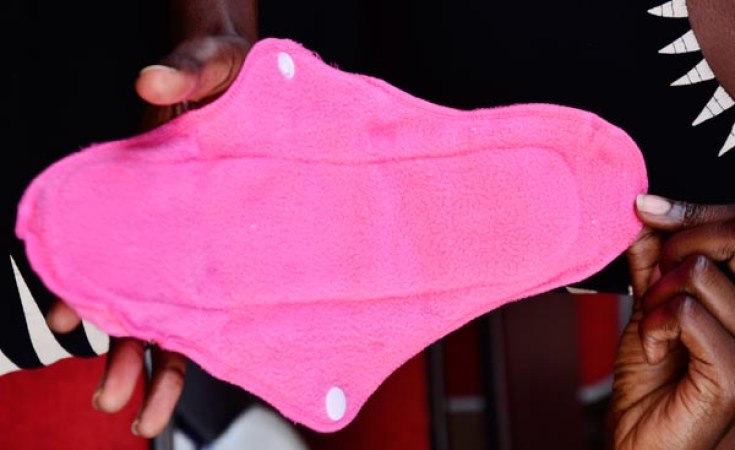
It is commendable to engage in teaching girls how to manufacture their reusable pads for sustainability. Still, the girl who sits down and sews her menstrual pad as a necessity, not an option, most likely cannot purchase soap. The girl who needs to sew her menstrual pad is most likely wearing a tattered panty if she wears one at all. Poverty, more than anything, is the cancer of our beautiful continent. It informs the culture, associations, and understanding of menstrual taboos because it links to the quality of education, looping back to poverty levels.
The need to slice the troubles affecting this diverse and vibrant continent into targeted interventions is necessary, but it must not be diversionary from our united foe. Nothing unites people more than when they share a common enemy. On this Menstrual Hygiene Day 2020, my prayer is that we create an equitably managed Africa with robust poverty alienation interventions servicing the common girl and boy.
No girl should be secluded from education and a clear pathway to her successes on any basis. And many girls have fallen victim to this tragically, not because they menstruate, but because they are poor.